



beacon®
AI-guided portfolio intelligence
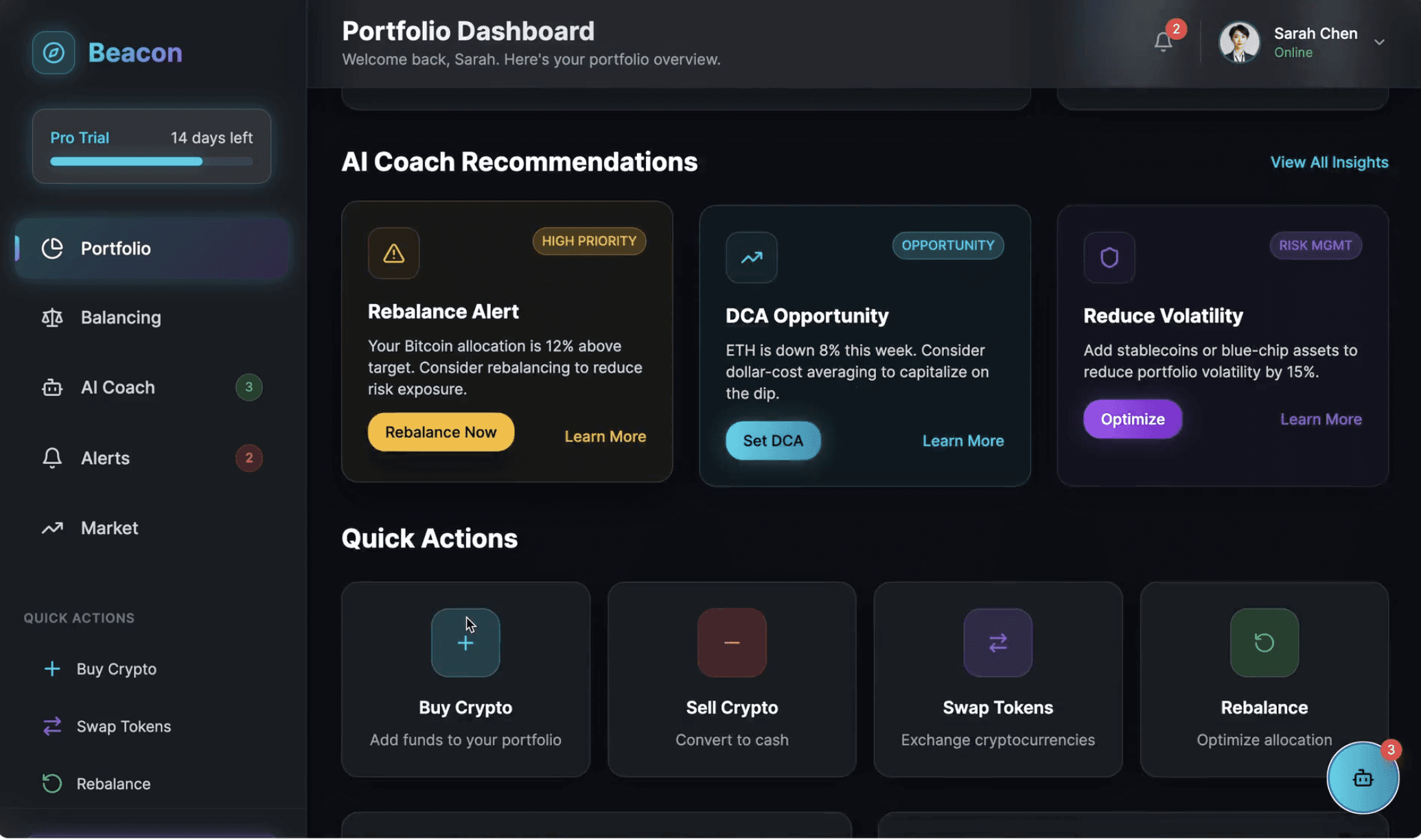
Beacon is a conceptual exploration of how AI can transform portfolio management into a guided, explainable workflow.
Instead of building another data-heavy dashboard, this project focuses on structuring complexity into clear insights that support confident decisions — without removing user control.
Beacon is not a commercial product. It is a forward-looking prototype demonstrating how AI can shape workflow logic, not just interface features.
Client
Personal Project (Concept)
Industry
Fintech / Crypto / AI-Assisted Decision Systems
Year
2025
Services Provided
AI Workflow Design, UX Strategy, Conceptual Product Design, Interaction Prototyping, Figma System Development
Overview®
//001
Traditional financial dashboards either overwhelm users with raw data or make decisions for them without clear reasoning. Beacon asks a different question:
How might an AI-assisted interface empower users to interpret complex financial data, understand system reasoning, and retain agency in decision-making?
Instead of replacing human judgment, Beacon’s concept focuses on AI as a collaborator — shaping insights, structuring information, and guiding actions through explainable, thoughtful workflows.
beacon®
AI-guided portfolio intelligence
Beacon is a conceptual exploration of how AI can transform portfolio management into a guided, explainable workflow.
Instead of building another data-heavy dashboard, this project focuses on structuring complexity into clear insights that support confident decisions — without removing user control.
Beacon is not a commercial product. It is a forward-looking prototype demonstrating how AI can shape workflow logic, not just interface features.
Client
Personal Project (Concept)
Industry
Fintech / Crypto / AI-Assisted Decision Systems
Year
2025
Services Provided
AI Workflow Design, UX Strategy, Conceptual Product Design, Interaction Prototyping, Figma System Development
Overview®
//001
Traditional financial dashboards either overwhelm users with raw data or make decisions for them without clear reasoning. Beacon asks a different question:
How might an AI-assisted interface empower users to interpret complex financial data, understand system reasoning, and retain agency in decision-making?
Instead of replacing human judgment, Beacon’s concept focuses on AI as a collaborator — shaping insights, structuring information, and guiding actions through explainable, thoughtful workflows.

Key Challenges®
//002
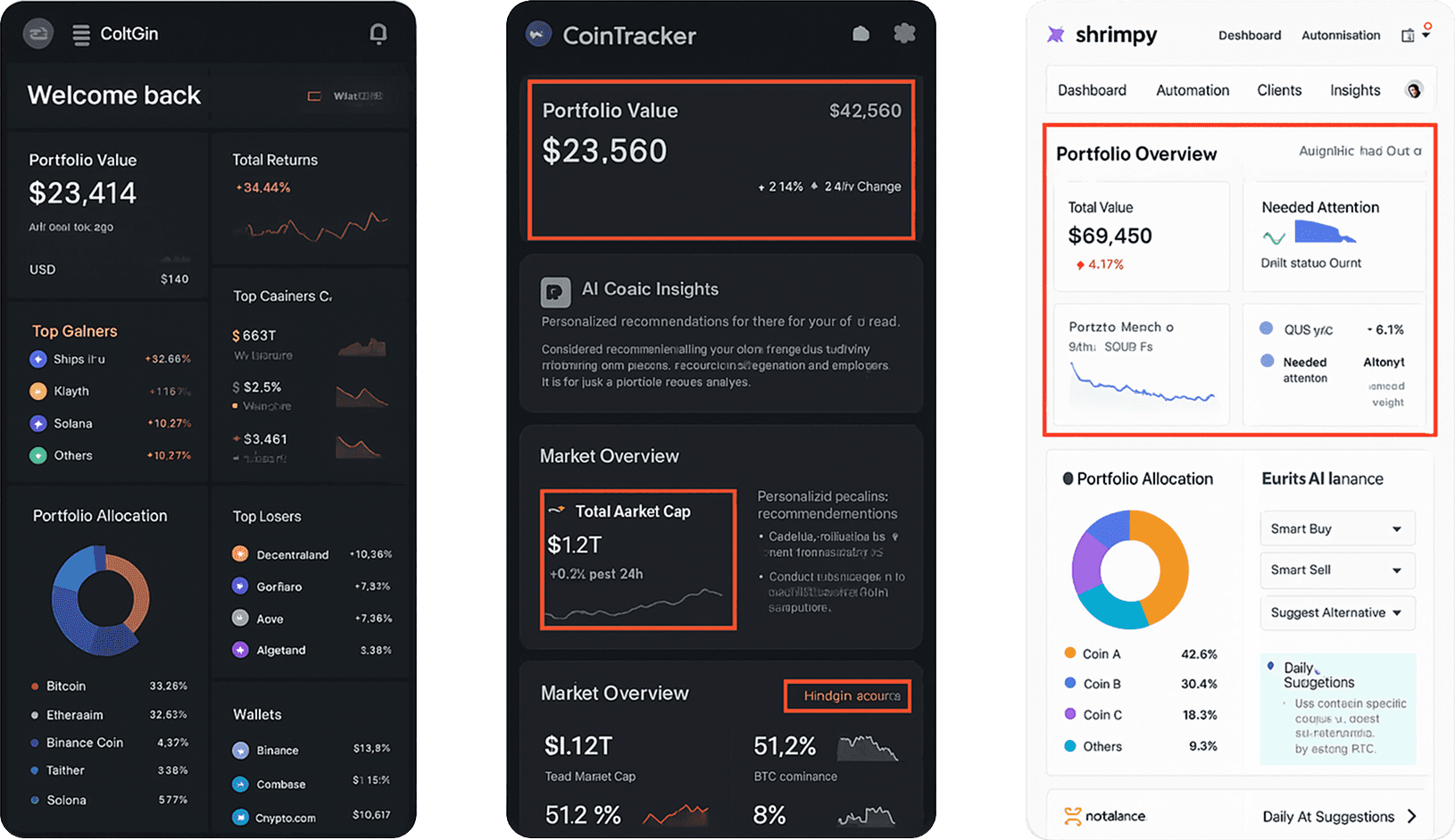
Crypto portfolio tools often present complexity without structure. Beacon explores how AI can turn fragmented signals into guided, interpretable experiences.
Information Overload
Dashboards expose volatility, allocation, and performance data without prioritization. Users must interpret everything themselves.
//01
Opaque Automation
Automated tools act without explaining why, reducing trust and transparency.
//02
Decision Uncertainty
Without structured guidance, users rely on instinct rather than insight.
//03
Cognitive Fatigue
Constant monitoring increases mental strain. Insight should reduce effort, not add to it.
//04
Key Challenges®
//002
Crypto portfolio tools often present complexity without structure. Beacon explores how AI can turn fragmented signals into guided, interpretable experiences.
Information Overload
Dashboards expose volatility, allocation, and performance data without prioritization. Users must interpret everything themselves.
//01
Opaque Automation
Automated tools act without explaining why, reducing trust and transparency.
//02
Decision Uncertainty
Without structured guidance, users rely on instinct rather than insight.
//03
Cognitive Fatigue
Constant monitoring increases mental strain. Insight should reduce effort, not add to it.
//04
Key Challenges®
//002
Crypto portfolio tools often present complexity without structure. Beacon explores how AI can turn fragmented signals into guided, interpretable experiences.
Information Overload
Dashboards expose volatility, allocation, and performance data without prioritization. Users must interpret everything themselves.
//01
Opaque Automation
Automated tools act without explaining why, reducing trust and transparency.
//02
Decision Uncertainty
Without structured guidance, users rely on instinct rather than insight.
//03
Cognitive Fatigue
Constant monitoring increases mental strain. Insight should reduce effort, not add to it.
//04

Design Approach®
//003
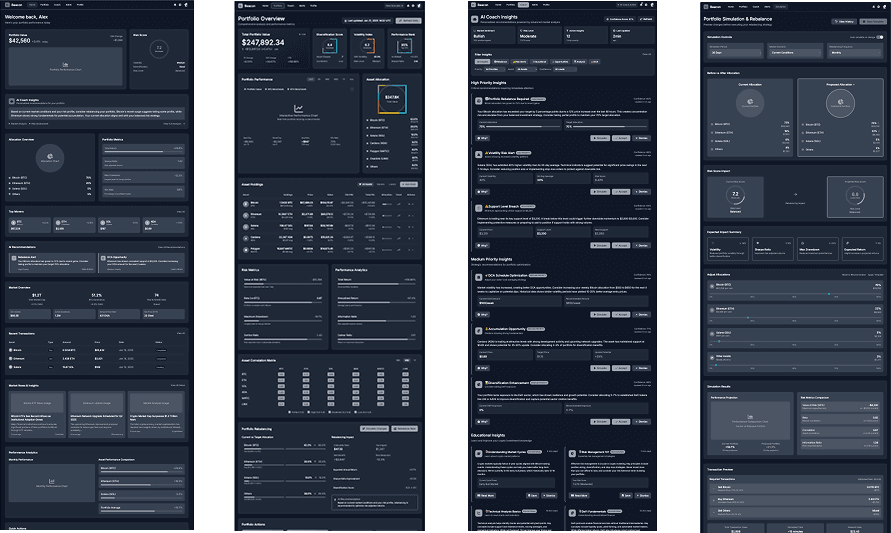
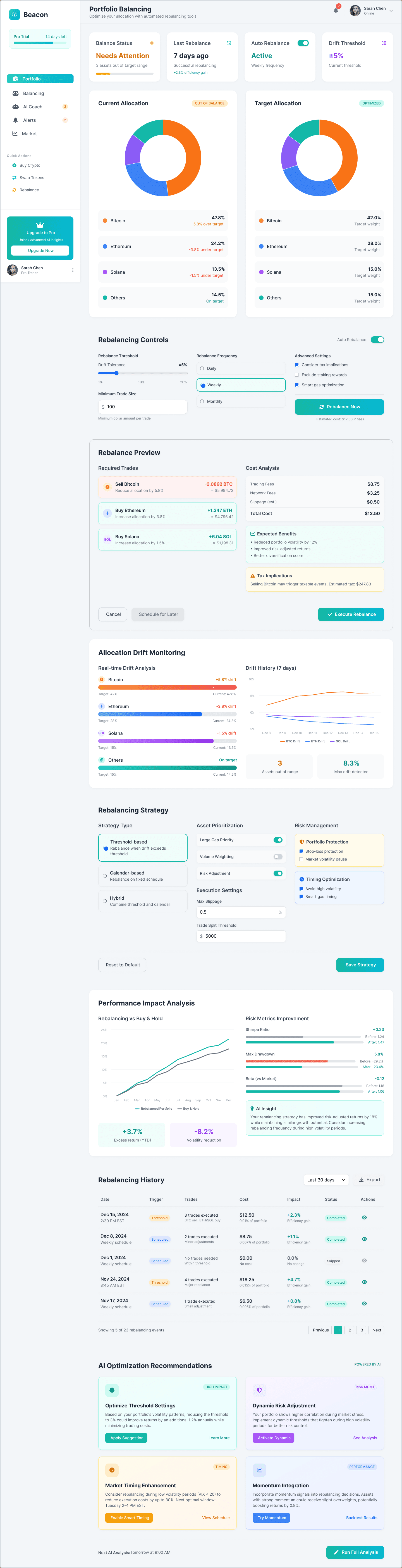
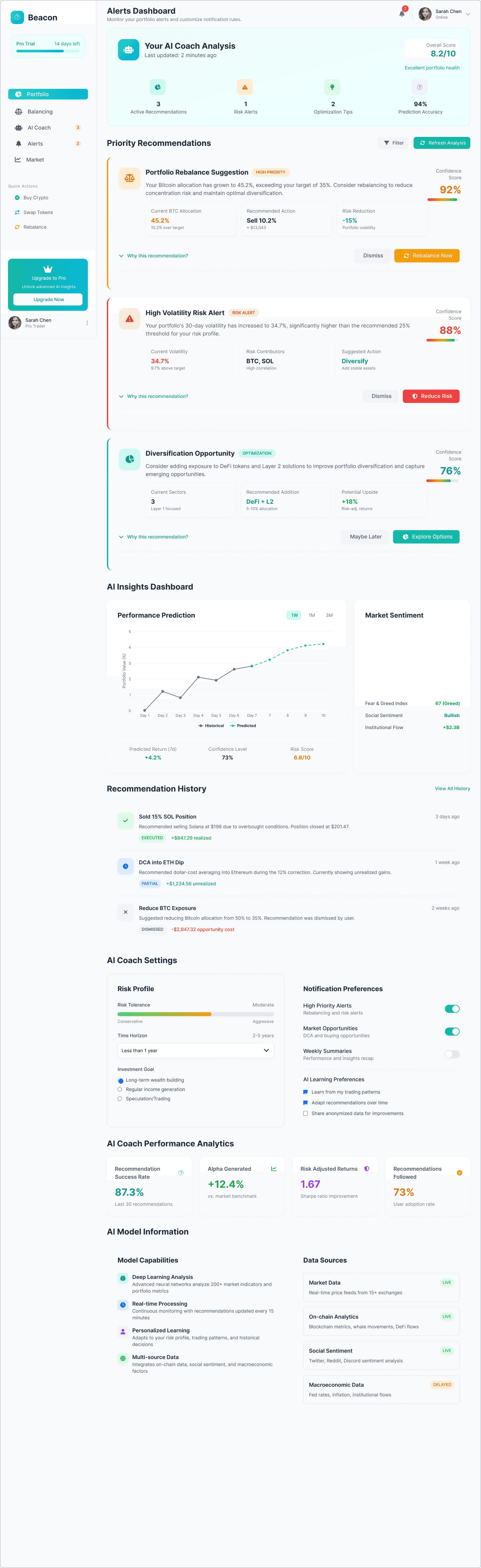
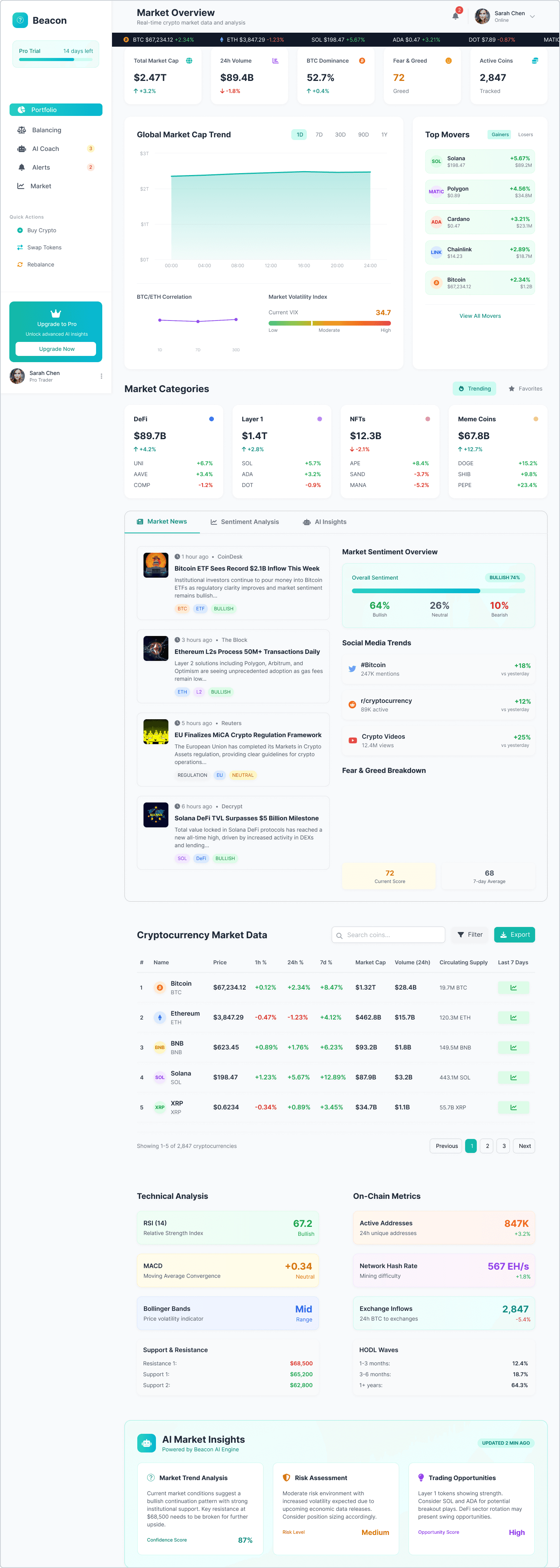
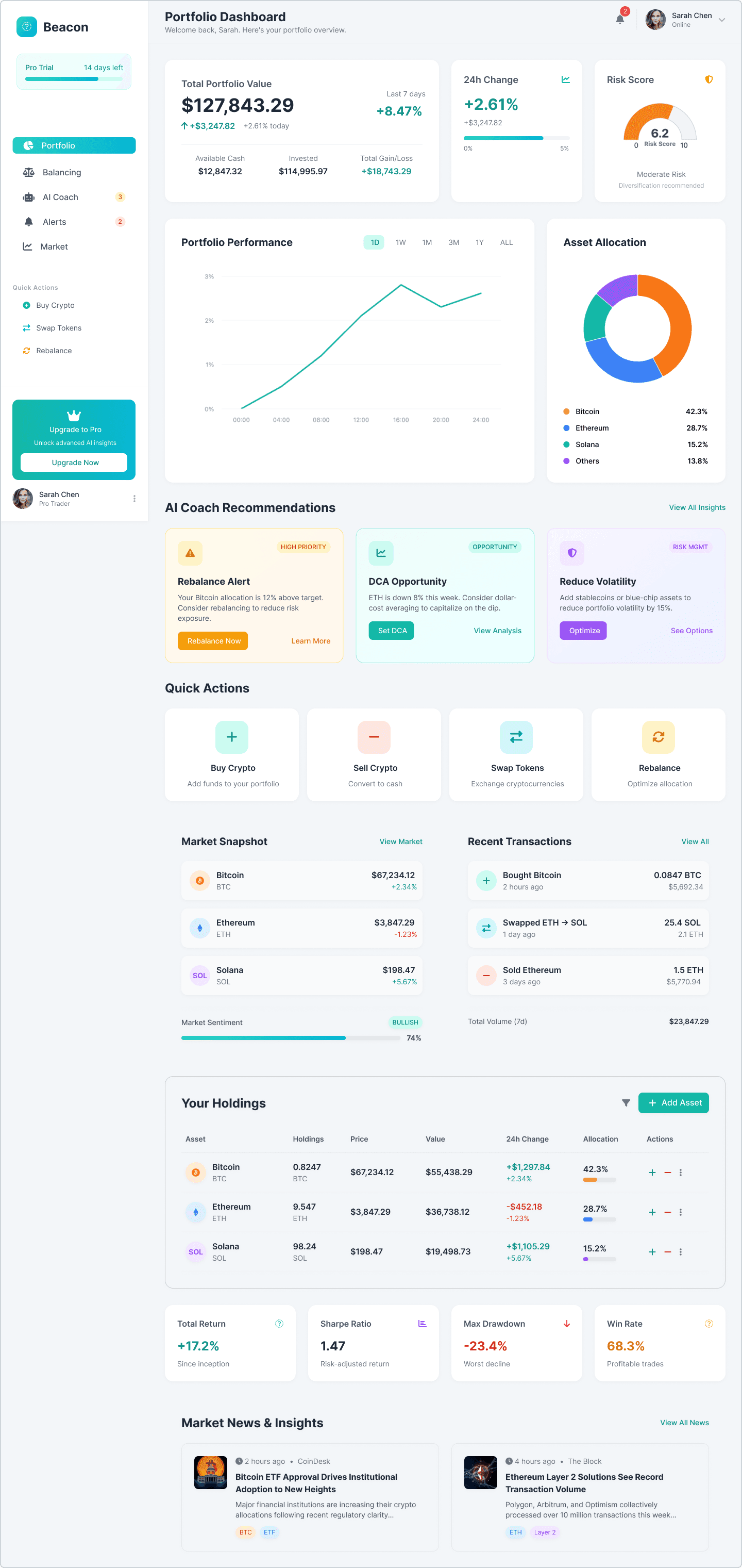
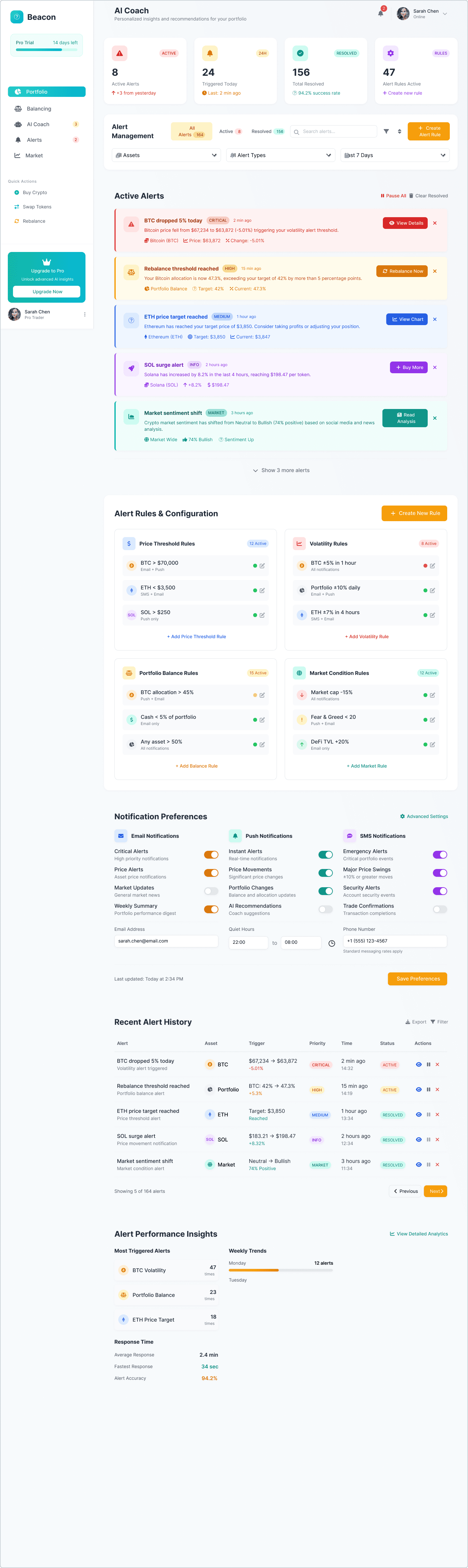
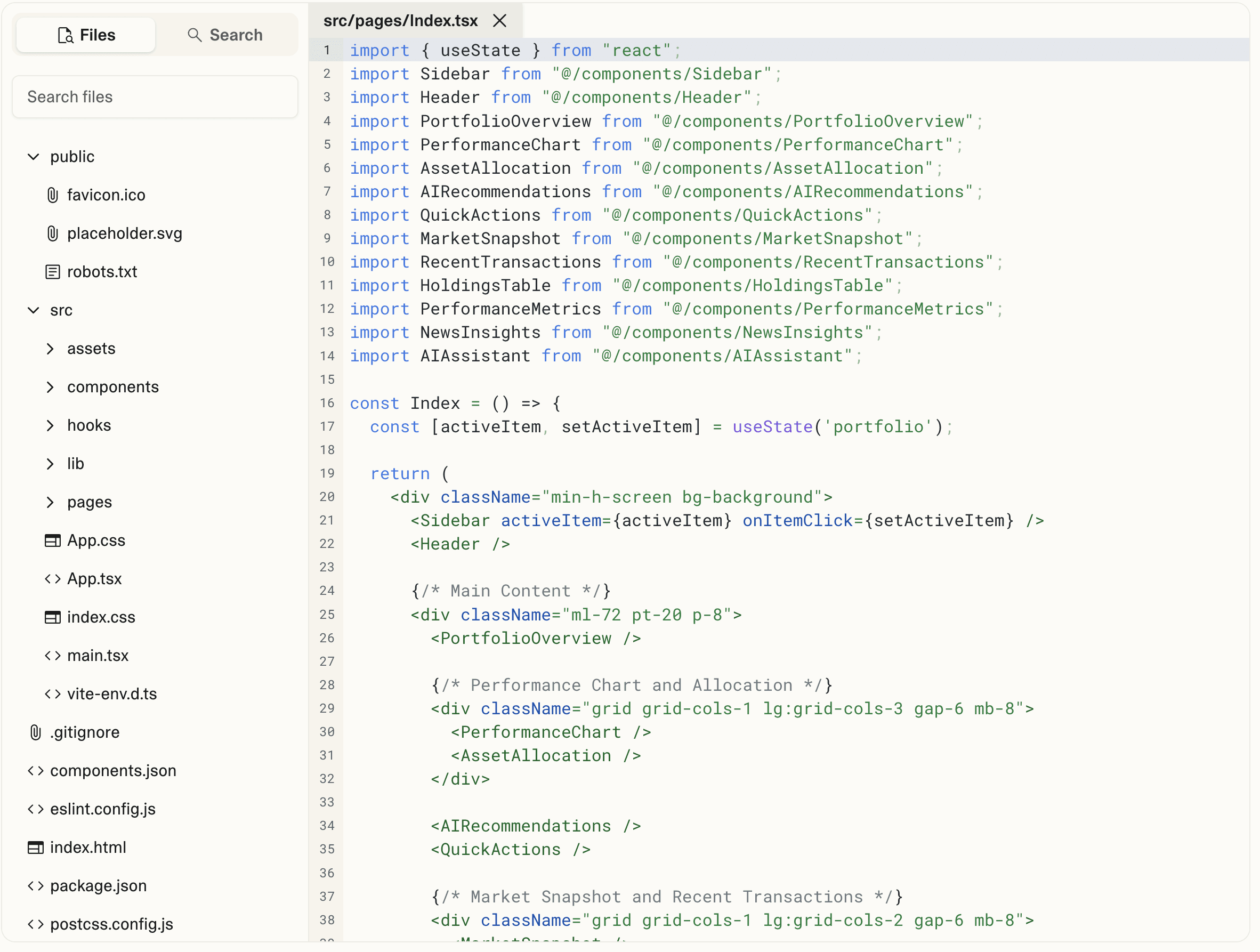
Beacon was developed through an AI-assisted workflow that defined structure before visuals.
The focus was on how AI supports interpretation and action across decision stages.
AI-Structured Exploration
Generative tools were used to test journey structures and embed recommendations into clear decision paths.
//01
Figma System Development
Validated flows were translated into a scalable system with defined hierarchy, reusable components, and structured insight modules.
//02
Explainable Interaction Patterns
Prototypes explored AI suggestions paired with reasoning, confidence signals, and optional deeper context.
//03
Design Approach®
//003
Beacon was developed through an AI-assisted workflow that defined structure before visuals.
The focus was on how AI supports interpretation and action across decision stages.
AI-Structured Exploration
Generative tools were used to test journey structures and embed recommendations into clear decision paths.
//01
Figma System Development
Validated flows were translated into a scalable system with defined hierarchy, reusable components, and structured insight modules.
//02
Explainable Interaction Patterns
Prototypes explored AI suggestions paired with reasoning, confidence signals, and optional deeper context.
//03
Design Approach®
//003
Beacon was developed through an AI-assisted workflow that defined structure before visuals.
The focus was on how AI supports interpretation and action across decision stages.
AI-Structured Exploration
Generative tools were used to test journey structures and embed recommendations into clear decision paths.
//01
Figma System Development
Validated flows were translated into a scalable system with defined hierarchy, reusable components, and structured insight modules.
//02
Explainable Interaction Patterns
Prototypes explored AI suggestions paired with reasoning, confidence signals, and optional deeper context.
//03

Final Outcome
//004
Beacon demonstrates how AI can evolve portfolio interfaces from passive dashboards into guided systems.
Structured Insight Delivery
Signals are prioritized and contextualized, reducing interpretation burden.
Transparent Recommendations
AI guidance includes rationale, supporting trust and learning.
Reduced Cognitive Load
Progressive disclosure patterns help users focus on what matters most.
Scalable AI Logic
The component structure supports future expansion into adaptive, data-driven recommendation systems.
Final Outcome
//04
Beacon demonstrates how AI can evolve portfolio interfaces from passive dashboards into guided systems.
Structured Insight Delivery
Signals are prioritized and contextualized, reducing interpretation burden.
Transparent Recommendations
AI guidance includes rationale, supporting trust and learning.
Reduced Cognitive Load
Progressive disclosure patterns help users focus on what matters most.
Scalable AI Logic
The component structure supports future expansion into adaptive, data-driven recommendation systems.

Explore Projects